
Ford Escape Transmission Evolution: From Manual to 8-Speed
The Ford Escape first rolled onto dealership floors in 2000 as a 2001 model, establishing itself as a pioneer in the then-emerging compact crossover SUV segment. Developed jointly with Mazda, the first-generation Escape offered something that would become increasingly rare in future iterations - transmission choice.
The original Escape launched with two distinct powertrain configurations. For drivers who preferred complete control, Ford offered a 2.0-litre Zetec inline-four engine paired with a five-speed manual transmission - a combination that delivered responsive handling and engaged driving experience. Meanwhile, those seeking the convenience of an automatic could opt for the more powerful 3.0-litre Duratec V6 engine matched with a four-speed automatic transmission.
The first-generation Escape utilized two different four-speed automatic transmissions depending on engine choice. The 2.3-litre four-cylinder models received the GF4AX-EL transmission, while V6 models were equipped with the CD4E automatic. Both front-wheel drive and all-wheel drive configurations were available, giving buyers flexibility based on their driving needs and regional weather conditions.
Hybrid Innovation Marks a Milestone
In 2005, Ford achieved a significant milestone by introducing the first-ever hybrid SUV to the market. The Escape Hybrid featured a completely different transmission architecture compared to its conventional siblings. Rather than using a traditional geared transmission, the hybrid model employed a planetary gear-based power-split device that seamlessly blended power from the 2.5-litre Atkinson cycle four-cylinder engine and electric motor.
This innovative transmission system eliminated the harsh shifting sensations typical of conventional automatics, instead providing a smooth, continuous power delivery. The system’s complexity remained hidden from drivers, who experienced it simply as an exceptionally refined automatic transmission. This early hybrid transmission laid the groundwork for the Ford future electrification strategies.
Second-Generation Refinements
The second-generation Escape debuted for the 2008 model year, bringing evolutionary rather than revolutionary changes to the transmission offerings. Ford continued with the four-speed automatic transmissions while gradually phasing out the manual option in most markets.
This generation saw refinements to the existing transmissions rather than complete overhauls, with programming adjustments improving shift quality and responsiveness. The hybrid model continued with its specialized planetary gear system, which received minor updates to enhance efficiency and durability.
By the final years of the second generation (2011-2012), the Escape transmission options had been simplified, with the four-speed automatic serving most models. The manual transmission became increasingly rare, reflecting changing consumer preferences in the compact SUV segment.
Third-Generation Revolution: Six-Speed and PowerShift
The 2013 model year marked a revolutionary change for the Ford Escape with the introduction of the third generation. Gone was the boxy styling of previous models, replaced by a sleek, modern design that reflected the dramatic changes under the hood. The transmission lineup underwent an equally significant transformation.
Ford discontinued the manual transmission option entirely for the third generation, reflecting the declining market for stick shifts in North America. A six-speed automatic transmission across the range replaced the aging four-speed automatic. This six-speed unit, known as the 6F35, offered better fuel efficiency, smoother shifts, and more responsive performance.
For some models equipped with the 1.6-litre EcoBoost engine, Ford introduced the PowerShift dual-clutch transmission. This automated manual transmission promised the efficiency of a manual with the convenience of an automatic. However, this transmission became notorious for reliability issues, with many owners reporting shuddering, hesitation, and premature failure. These problems would become one of the most significant challenges for third-generation Escape owners, often requiring complete transmission replacement at relatively low mileage points, typically around 70,000 kilometres.
For the 2017 refresh, Ford continued with the six-speed automatic but phased out the problematic PowerShift transmission. The 6F35 transmission received continuous improvements throughout this generation’s production run, with models from 2013-2016 differing mechanically from those manufactured in 2017-2019. The changes focused on durability enhancements and shift quality refinements.
Fourth-Generation Innovation: 8-Speed Precision
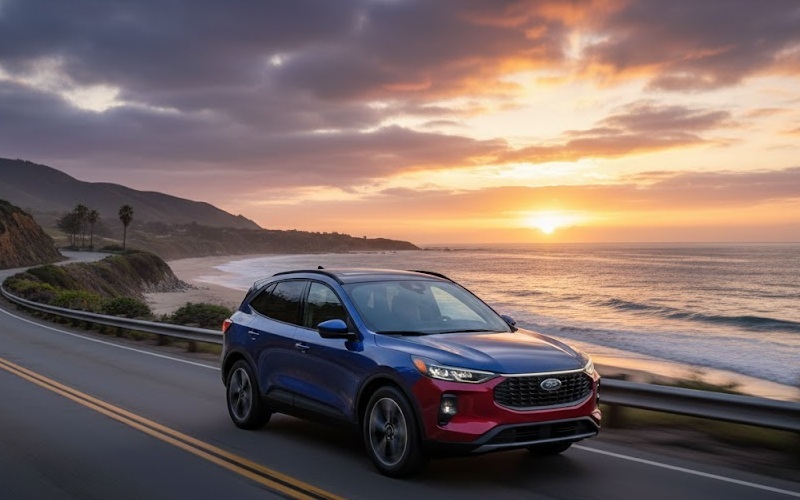
The fourth generation of the Ford Escape, introduced for the 2020 model year, brought the most sophisticated transmission technology yet to this Ford compact SUV. The standard powertrain configuration featured the new 8F35 eight-speed automatic transmission paired with the 1.5-litre three-cylinder EcoBoost engine or the optional 2.0-litre four-cylinder EcoBoost.
This eight-speed transmission represented a significant advancement over the previous six-speed units, offering closer gear ratios for improved acceleration, better fuel economy, and reduced engine noise at highway speeds. The additional gears allowed the engine to operate more frequently in its optimal power and efficiency range.
The hybrid and plug-in hybrid variants, reintroduced after being absent during the third generation, featured a specialized electronic Continuously Variable Transmission (eCVT) system. Similar in concept to the original Escape Hybrid’s transmission but thoroughly modernized, this system delivered exceptionally smooth operation while maximizing the efficiency benefits of the electrified powertrain.
For the 2023 model year refresh, Ford maintained the eight-speed automatic for conventional powertrains while further refining the hybrid transmission systems for improved efficiency and responsiveness. The programming received updates to enhance shift logic and responsiveness, particularly in sport mode.
Transmission Technology Evolution Impact
The evolution of Ford Escape transmissions over four generations reflects broader automotive industry trends toward more gears, greater efficiency, and increased electrification. From the simple five-speed manual and four-speed automatic options of the first generation to the sophisticated eight-speed and electronic continuously variable transmissions of today, each advancement has aimed to balance several competing priorities.
Fuel efficiency has been a constant driver of transmission development. The progression from four to six to eight forward gears has allowed engines to operate more frequently at optimal RPM ranges, reducing fuel consumption. Simultaneously, these advancements have improved acceleration by providing more appropriate gear ratios for various driving conditions.
Refinement has also improved dramatically. Early Escape transmissions were functional but relatively basic, with noticeable shifts and limited ability to adapt to driving styles. Modern Escape transmissions feature adaptive shift logic that learns driver preferences, smoother gear changes, and reduced hunting between gears.
However, not all changes have been positive. The introduction of more complex transmissions has generally increased repair costs and reduced the feasibility of owner maintenance. The PowerShift transmission experiment, in particular, highlights how innovation without adequate refinement and testing can lead to significant reliability issues.
The Future of Escape Transmissions
As Ford continues to develop the Escape platform, transmission technology will likely continue its evolutionary path. Industry trends suggest future models may feature transmissions with even more forward gears, further refined control systems, and increased integration with hybrid and electric propulsion systems.
With the Ford commitment to electrification, future Escape models will likely feature more sophisticated hybrid and plug-in hybrid transmissions, potentially leading to an eventual all-electric variant with a single-speed reduction gear system typical of battery electric vehicles.
Whatever direction Ford takes with future transmission technology, the goal remains consistent: to deliver the optimal balance of efficiency, performance, durability, and driver satisfaction in an increasingly competitive compact SUV market.
Five Transmission Facts About the Ford Escape
The Hybrid Pioneer
The 2005 Ford Escape became the world’s first hybrid SUV, featuring a revolutionary power-split transmission that seamlessly blended power from both the gasoline engine and electric motor without traditional gear shifting.
The Disappearing Manual
The first-generation Escape offered a five-speed manual transmission option that proved increasingly rare as production continued, becoming a sought-after configuration for enthusiasts who prefer the engagement of a stick shift.
The Planetary Gear Complexity
The Escape Hybrid’s transmission contains a complex arrangement of planetary gears that allow the system to function as both a continuously variable transmission and a power-splitting device, using over 30 precision components in a package roughly the same size as a conventional transmission.
The Eight-Speed Evolution
The 2020 Escape eight-speed automatic transmission contains more computational power than the entire vehicle control system of the original 2001 model, making thousands of adjustment decisions per second based on driving conditions.
The Transmission Fluid Controversy
The Ford recommendation for “lifetime” transmission fluid in some Escape models created controversy among mechanics, with many professionals recommending fluid changes every 48,000 to 96,000 kilometres despite the official guidance.
Questions and Answers About Ford Escape Transmissions
Which generation of Ford Escape had the most reliable transmission?
The second-generation (2008-2012) generally has the most reliable transmission options, particularly in the later years when the four-speed automatic had been refined through years of production. These simpler transmissions lacked the complexity of later models and had fewer reported issues.
How often should I change the transmission fluid in my Ford Escape?
Despite some “lifetime fluid” claims, transmission specialists recommend changing the fluid every 48,000 to 64,000 kilometres for conventional automatics and every 96,000 kilometres for hybrid models. Driving in severe conditions may require more frequent service intervals.
What warning signs indicate transmission problems in a Ford Escape?
Common warning signs include delayed engagement when shifting from park to drive, rough or harsh shifting, unusual noises during acceleration, slipping sensations where RPMs increase without corresponding speed increases, and illumination of the check engine or transmission warning lights.
Is it possible to convert an automatic transmission Escape to manual?
While technically possible, converting an automatic model to manual transmission is extremely complex, requiring extensive modifications to the drivetrain, electrical system, and interior components. The cost and complexity make it impractical for most owners.
How did the Ford Escape transmission evolution affect towing capacity?
The progression from four-speed to six-speed to eight-speed transmissions generally improved the towing capabilities by providing more appropriate gear ratios for hauling. The third-generation 2.0-litre EcoBoost with six-speed automatic offered the best towing capacity at 1,587 kilograms when properly equipped.
*Disclaimer: Content contained in this post is for informational purposes only and may include features and options from US or international models. Please contact the dealership for more information or to confirm vehicle, feature availability.*


