
2026 Ford Escape: How Does the Hybrid System Work?
Hybrid vehicles combine internal combustion engines with electric motors to improve efficiency, reduce fuel consumption, and lower emissions. In compact SUVs such as the new Ford Escape, hybrid technology is designed to provide smooth everyday driving while maintaining the versatility expected from this type of vehicle.
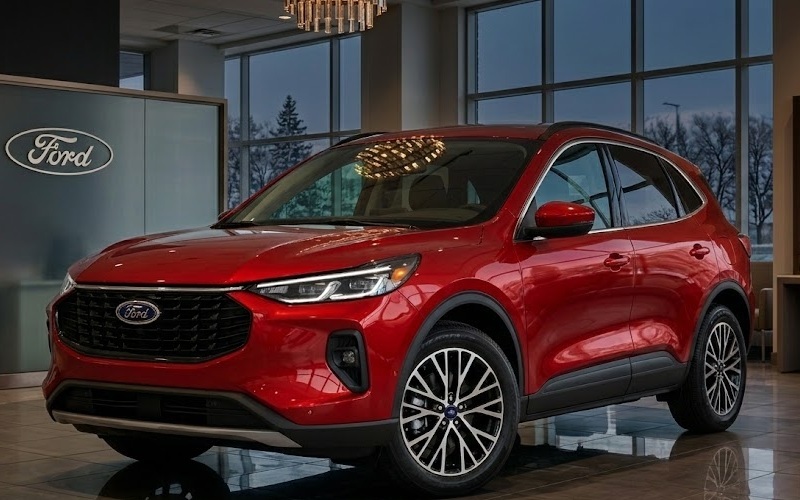
The hybrid system in the Escape integrates multiple components that work together automatically: a gasoline engine, an electric motor, a battery pack, and an advanced control system. These elements coordinate power delivery depending on driving conditions, allowing the vehicle to operate using electric power, gasoline power, or a combination of both.
Understanding how the hybrid system works requires examining not only the main power sources but also the supporting technologies that manage energy flow and optimize efficiency.
2026 Ford Escape Powertrain Architecture
The hybrid system used in the Ford Escape is a parallel hybrid configuration. This means the gasoline engine and electric motor can both deliver power to the wheels either independently or together.
The main components of the system include:
A gasoline internal combustion engine
One or more electric motor generators
A high-voltage lithium-ion battery pack
A power control unit
An electronically controlled continuously variable transmission (eCVT)
These components communicate through a network of sensors and electronic controllers that continuously evaluate speed, acceleration demand, battery charge level, and driving conditions.
The goal of the system is to maximize efficiency while maintaining consistent performance.
Gasoline Engine
Engine Configuration
The hybrid system in the Escape typically uses a four-cylinder gasoline engine with an approximate displacement of 2.5 litres. The engine operates using the Atkinson cycle rather than the traditional Otto cycle used in many gasoline engines.
The Atkinson cycle delays the closing of the intake valves, which reduces pumping losses and increases thermal efficiency.
This engine design prioritizes fuel efficiency rather than maximum power output.
Role Within the Hybrid System
The gasoline engine performs several important tasks:
Providing power when higher speeds or heavy loads require additional energy
Assisting the electric motor during acceleration
Charging the battery through the generator when needed
Because the electric motor assists in demanding driving situations, the gasoline engine can operate within a more efficient speed range.
Electric Motor Generators
Electric Drive Motor
The electric motor is one of the central components of the hybrid system. It converts electrical energy stored in the battery into mechanical energy that drives the wheels.
Electric motors deliver torque instantly, improving acceleration from a stop and enhancing responsiveness in urban driving environments.
During low-speed operation, the vehicle may rely entirely on electric propulsion, meaning the gasoline engine remains off.
Generator Function
Hybrid systems typically include a second motor-generator that converts mechanical energy from the gasoline engine into electrical energy.
This generator performs several functions:
Recharging the battery while driving
Controlling engine speed
Supporting the operation of the transmission system
Together, the drive motor and generator allow the hybrid system to switch seamlessly between operating modes.
Lithium-Ion Battery Pack
Battery Structure
The hybrid battery pack stores electrical energy used by the electric motor. It consists of multiple lithium-ion cells arranged in modules.
Lithium-ion batteries are commonly used in hybrid and electric vehicles because they provide high energy density, long service life, and relatively low weight compared with older battery technologies.
The battery pack is typically mounted within the vehicle structure to maintain a balanced weight distribution.
Thermal Management
Temperature management is essential for maintaining battery efficiency and longevity. The hybrid system includes a thermal management system that monitors battery temperature and regulates cooling when necessary.
Sensors measure temperature levels across the battery modules. If the system detects excessive heat, the cooling system activates to maintain optimal operating conditions.
Power Control Unit
Electronic Control Systems
The power control unit acts as the central coordinator of the hybrid system. It receives information from numerous sensors throughout the vehicle, including:
Vehicle speed sensors
Throttle position sensors
Battery charge sensors
Motor temperature sensors
Using this data, the control unit determines the most efficient way to distribute power between the gasoline engine and the electric motor.
Energy Conversion
The power control unit also converts electrical current between different forms:
Direct current (DC) stored in the battery
Alternating current (AC) used by electric motors
An inverter performs this conversion so the electric motor can operate efficiently under various driving conditions.
Electronically Controlled Continuously Variable Transmission (eCVT)
Transmission Design
The hybrid Escape uses an electronically controlled continuously variable transmission rather than a conventional stepped automatic transmission.
An eCVT relies on a planetary gear system to distribute power between the gasoline engine and the electric motor.
This design allows the system to continuously adjust gear ratios without fixed gear steps.
Advantages of eCVT
The eCVT offers several advantages for hybrid operation:
Smooth acceleration without noticeable gear changes
Improved energy efficiency
Better coordination between the engine and the electric motor power
The transmission works closely with the hybrid control unit to determine how power flows to the wheels.
Regenerative Braking System
Energy Recovery
One of the most important features of hybrid vehicles is regenerative braking. During braking or deceleration, the electric motor operates as a generator.
Instead of wasting kinetic energy as heat in the brake pads, the generator converts it into electrical energy.
This electricity is then stored in the battery.
System Integration
Regenerative braking works together with the conventional hydraulic braking system.
When the driver presses the brake pedal, the vehicle’s control system determines how much braking force should come from regenerative braking and how much should come from mechanical brakes.
This balance ensures consistent braking performance while maximizing energy recovery.
Operating Modes of the Hybrid System
Electric-Only Operation
At low speeds and during light acceleration, the Escape may operate using only the electric motor.
In this mode:
The gasoline engine remains off
Power comes exclusively from the battery
Noise and vibration levels are reduced
Electric-only operation is common in city driving conditions.
Hybrid Operation
During moderate acceleration or cruising, the gasoline engine and electric motor may operate together.
In this mode:
The gasoline engine provides sustained power
The electric motor supplements torque during acceleration
The system continuously optimizes efficiency
Engine-Only Operation
Under certain conditions, such as sustained highway speeds, the gasoline engine may provide most of the propulsion.
However, the hybrid system still monitors battery levels and may recharge the battery when excess engine power is available.
Energy Management Strategy
Intelligent Control Algorithms
Hybrid systems rely on sophisticated software to manage energy flow. Algorithms analyze driving conditions and predict the most efficient power source.
Factors considered include:
Vehicle speed
Driver acceleration input
Battery charge level
Road load conditions
The system makes these decisions automatically without requiring driver input.
Efficiency Optimization
By constantly adjusting power distribution, the hybrid system reduces unnecessary fuel consumption. Electric propulsion is prioritized in situations where it provides the greatest efficiency advantage.
2026 Ford Escape FAQ
What is the main purpose of the hybrid system in the 2026 Ford Escape?
The hybrid system improves efficiency by combining a gasoline engine with an electric motor. This allows the vehicle to use electric power during certain driving conditions while maintaining the range and versatility of a gasoline-powered vehicle.
What type of battery does the Escape hybrid use?
The system uses a lithium-ion battery pack composed of multiple cells arranged in modules. This battery stores electrical energy that powers the electric motor.
What is regenerative braking?
Regenerative braking is a process where the electric motor operates as a generator during braking. It converts kinetic energy from the vehicle’s motion into electrical energy that recharges the battery.
Can the 2026 Ford Escape drive on electricity alone?
Yes. During low-speed driving and light acceleration, the vehicle can operate in electric-only mode, with the gasoline engine off and the electric motor powering the wheels.
How does the hybrid transmission work?
The Escape uses an electronically controlled continuously variable transmission (eCVT). This transmission uses a planetary gear system to distribute power between the gasoline engine and the electric motor while maintaining smooth, efficient operation.
*Disclaimer: Content contained in this post is for informational purposes only and may include features and options from US or internacional models. Please contact the dealership for more information or to confirm vehicle, feature availability.*


