
2026 Ford Bronco Sport SUV: What Drive Train Does It Use?
The Ford Bronco Sport has with a drivetrain system engineered to provide traction, stability, and torque distribution across a variety of road and off-road conditions. The drivetrain integrates the engine, transmission, and differential systems, along with electronically controlled all-wheel-drive mechanisms, to deliver power efficiently to the wheels.
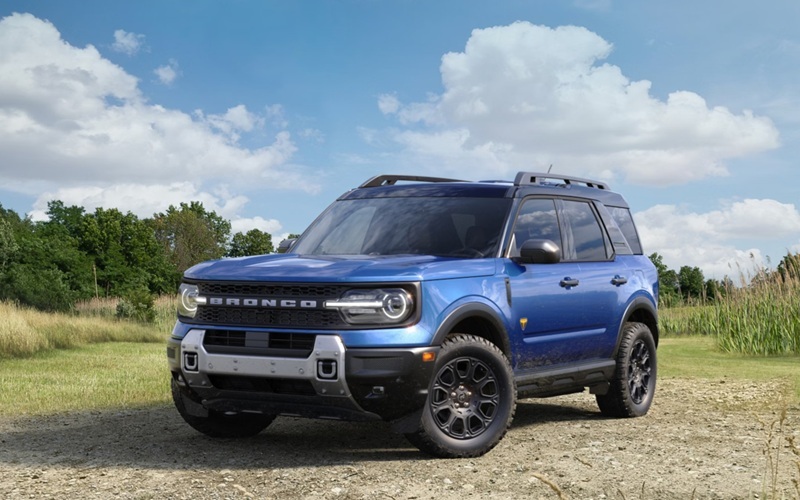
The 2026 Ford Bronco Sport Drivetrain System
The drivetrain in the Ford Bronco Sport is a front-biased all-wheel-drive system. Under normal conditions, most torque is delivered to the front wheels, while the rear wheels are engaged as needed to meet traction requirements.
The system continuously monitors driving conditions and adjusts torque distribution in real time to maintain stability and control.
Primary Functions
Transfer engine torque to the wheels
Optimize traction across varying surfaces
Enhance vehicle stability and handling
Support off-road driving capabilities
Improve efficiency by reducing unnecessary drivetrain load
Core Components
Engine Output Interface
The drivetrain begins at the engine, where torque is generated and transmitted to the transmission. The Bronco Sport typically uses turbocharged gasoline engines that deliver torque across a broad range of engine speeds.
Transmission System
The vehicle has an automatic transmission, typically an 8-speed unit, which:
Adjusts gear ratios to match driving conditions
Transfers torque to the front differential
Integrates with electronic control systems for optimized shifting
The transmission is a key element in balancing performance and efficiency.
Power Transfer Unit (PTU)
The power transfer unit is mounted on the transmission and redirects torque to the rear drivetrain components.
Functions include:
Splitting torque between front and rear axles
Engaging or disengaging the rear drive as required
Managing torque flow under varying loads
The PTU operates continuously but varies its output depending on system demand.
Driveshaft
A longitudinal driveshaft transmits torque from the PTU to the rear drive unit. It is engineered to:
Handle rotational speeds and torque loads
Minimize vibration through balanced construction
Maintain durability under off-road conditions
Rear Drive Unit (RDU)
The rear drive unit distributes torque to the rear wheels. It may include:
A rear differential
Electronically controlled clutch packs
Torque vectoring capability in advanced configurations
The RDU plays a critical role in enhancing traction and off-road performance.
Front and Rear Differentials
Differentials allow wheels on the same axle to rotate at different speeds, which is essential during cornering.
Key features:
Open or electronically controlled differential designs
Torque distribution between left and right wheels
Integration with traction control systems
All-Wheel Drive Functionality
Torque Distribution
The AWD system dynamically adjusts torque distribution between the front and rear axles. Under normal driving conditions:
Approximately 90–100% of torque may be directed to the front wheels
When slip or low traction is detected:
Torque is transferred to the rear axle
Distribution may approach a near 50:50 ratio depending on conditions
This adaptability improves stability and control.
Electronic Control System
The AWD system is managed by a control module that processes data from multiple sensors, including:
Wheel speed sensors
Steering angle sensor
Throttle position
Yaw rate sensor
Based on this data, the system predicts and responds to traction loss.
Torque Vectoring (If Equipped)
In certain configurations, the rear drive unit can independently distribute torque between the left and right rear wheels.
Benefits include:
Improved cornering stability
Enhanced traction on uneven surfaces
Better control during off-road driving
Terrain Management System
G.O.A.T. Modes (Goes Over Any Terrain)
The drivetrain integrates with a terrain management system that allows the driver to select predefined driving modes.
Common modes may include:
Normal
Eco
Sport
Slippery
Sand
Mud/Ruts
Each mode adjusts drivetrain behaviour, including:
Torque distribution
Throttle response
Transmission shift patterns
Traction control sensitivity
Off-Road Enhancements
For off-road use, the system may include:
Increased rear torque engagement
Reduced traction control intervention
Optimized throttle mapping for low-speed control
These adjustments improve performance on loose or uneven terrain.
System Functionality
Power Flow Process
The engine generates torque.
The transmission adjusts torque output based on gear selection.
The PTU distributes torque to the front wheels and sends a portion to the driveshaft.
The driveshaft transfers torque to the rear drive unit.
The rear differential distributes torque to the rear wheels.
This process is continuously adjusted based on driving conditions.
Slip Detection and Response
When wheel slip is detected:
Sensors identify speed differences between wheels
The control module calculates required torque redistribution
Clutch packs engage to transfer torque to wheels with traction
This occurs within milliseconds to maintain stability.
Integration with Stability Systems
The drivetrain works in conjunction with:
Electronic Stability Control (ESC)
Traction Control System (TCS)
Anti-lock Braking System (ABS)
These systems coordinate braking and torque distribution to maintain control.
Engineering Considerations
Efficiency Optimization
The front-biased AWD layout reduces energy loss by limiting rear drivetrain engagement when not needed. This improves fuel efficiency compared to full-time AWD systems.
Thermal Management
Drivetrain components generate heat under load. The system includes:
Lubrication systems for gears and clutches
Heat dissipation through housing design
Cooling strategies for high-load conditions
Durability and Load Handling
The drivetrain is engineered to withstand:
High torque loads
Off-road impacts and vibrations
Extended operation under stress
Materials include hardened steel gears and reinforced housings.
Noise, Vibration, and Harshness (NVH)
Design considerations minimize:
Driveline vibration
Gear noise
Mechanical resonance
Balanced driveshafts and precision gear machining contribute to smooth operation.
Diagnostics and Maintenance
The system includes onboard diagnostics to detect:
Clutch wear
Sensor faults
Torque distribution irregularities
Diagnostic procedures and servicing can be performed at facilities such as Team Ford.
Operational Behavior
During standard driving, the drivetrain operates automatically without driver intervention. The system continuously adapts to:
Road surface conditions
Driver inputs
Vehicle dynamics
In low-traction environments, increased rear torque engagement improves stability. In high-traction conditions, the system prioritizes efficiency by limiting rear axle involvement.
If a malfunction occurs, warning indicators may appear in the instrument cluster. Diagnostic evaluation and system inspection can be conducted at authorized service centers like Team Ford.
FAQ About the 2026 Ford Bronco Sport
What type of drivetrain does the 2026 Ford Bronco Sport use?
It uses an electronically controlled all-wheel drive system with a front-wheel-drive-based architecture.
How is torque distributed between the axles?
Torque is primarily sent to the front wheels but can be redistributed to the rear axle as needed for traction.
Does the system support off-road driving?
Yes, the drivetrain integrates with terrain management modes that optimize performance on various surfaces.
What is torque vectoring?
Torque vectoring is the ability to distribute torque between left and right wheels on the same axle to improve stability and traction.
Is the AWD system always active?
The system is always monitoring conditions, but rear wheel engagement varies depending on traction requirements.
*Disclaimer: Content contained in this post is for informational purposes only and may include features and options from US or internacional models. Please contact the dealership for more information or to confirm vehicle, feature availability.*


